

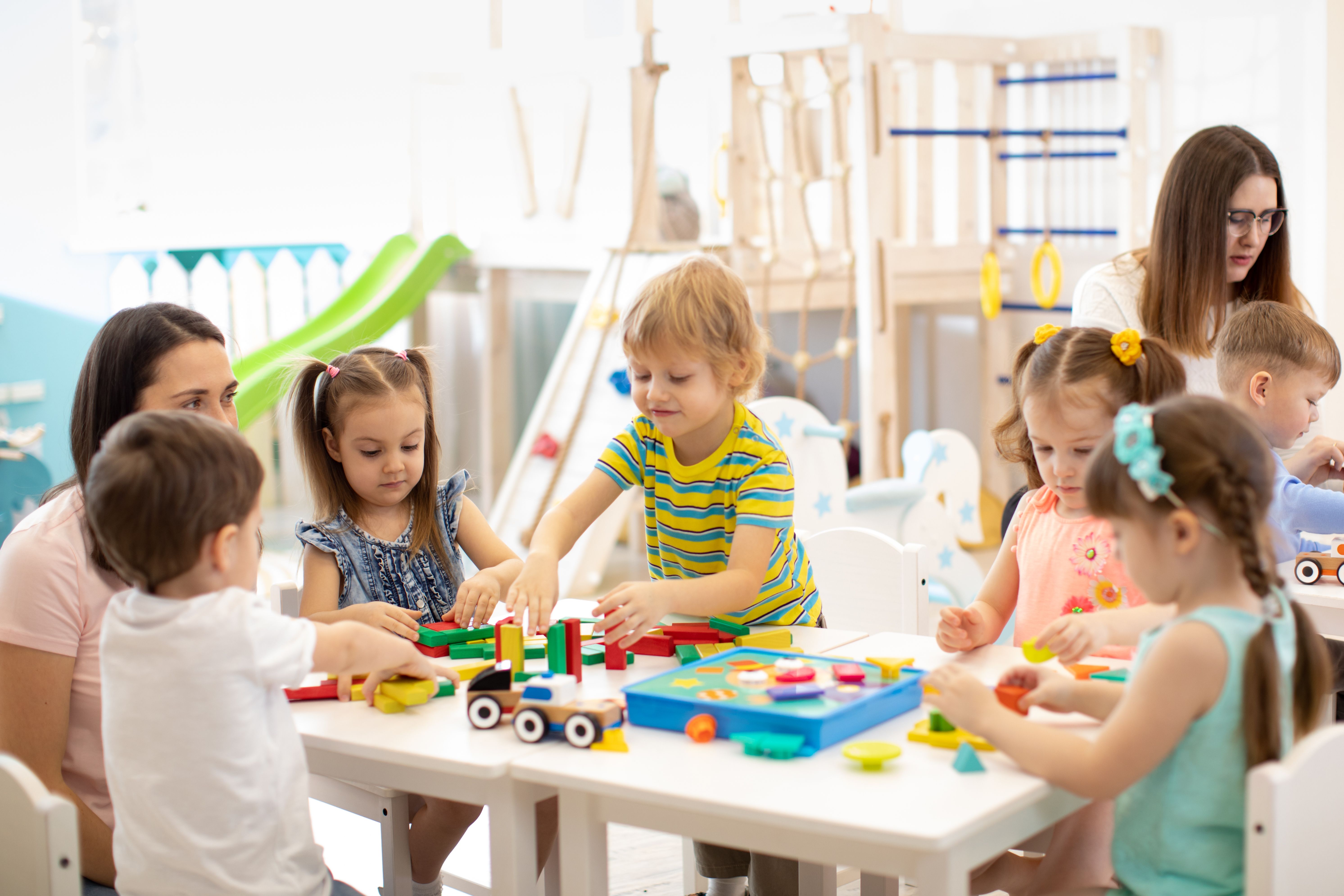
Everyday stories, play and interactions offer ways to explore fairness and respect. Consider practical ideas for educators, with families and communities involved.
In this article
A disagreement over a favourite toy can become a conversation about listening, feelings and a fair next step. A story can prompt children to think about how someone else feels. These everyday moments give educators opportunities to bring respectful relationships into the life of a childcare centre.
The practical work starts with the people, activities and conversations children encounter each day. How do adults respond when they're frustrated? Who gets a turn to lead? What messages do the books and play resources send about the roles people can take?
In its submission on the Early Years Strategy, Our Watch identifies early childhood settings as one part of a wider approach to preventing gender-based violence. That approach also involves families, communities, governments and specialist organisations. It gives early education an important contribution, without making educators responsible for solving violence on their own.
Bring feelings into everyday conversations
Emotional literacy can be explored through familiar situations. When a child is upset, educators can help them find words, pictures or another suitable way to express what they're feeling. The response can be adapted to the child's age, communication and support needs.
For instance, you might name what you notice and invite the child to respond: “You look disappointed that your turn has finished. Is that how you're feeling?” Give them room to correct you. An adult's interpretation won't always match the child's experience.
Stories, songs and imaginative play offer other opportunities to talk about feelings. Ask what a character might be experiencing, what they could say or who they could turn to for help. Keep the conversation open rather than looking for one perfect answer.
ACECQA’s guidance on equity and inclusion encourages educators to support children's feelings, friendships and interactions, alongside respectful relationships and participation. These ideas can be considered as part of ordinary routines, as well as planned activities.
Let children see respectful disagreement
Adults have opportunities to demonstrate the behaviour they ask of children. That might mean listening to a colleague's view, acknowledging a mistake or explaining a calm next step when something has gone wrong.
With children, focus on what happened and what each person needs. A disagreement during play could prompt questions such as, “What were you hoping to do?” and “How could we make room for both ideas?” Help children consider a response they can understand and try.
Keep expectations appropriate to the situation. A toddler may need an adult close by, using simple language and offering support. An older preschool child may be able to talk through several possible choices. Adapt the conversation rather than expecting every child to respond in the same way.
The aim is to create opportunities to practise listening, expressing a need and finding a fair way forward. One conversation won't settle every disagreement, and educators can return to the same ideas as situations arise.
Explore fairness through stories and play
You can explore gender equality through the resources children use. Who is shown caring for a baby, building a house or leading an adventure? Are children free to explore different interests without being directed towards an activity because of their gender?
Review books, dress-ups, dolls, construction materials and other play resources with those questions in mind. Invite children to imagine different roles and listen to the ideas they bring. If a child says an activity is only for boys or girls, use it as an opportunity to explore that belief calmly.
Stories can also open a discussion about fairness. Ask whether everyone had a chance to take part, how a character's actions affected someone else, or what a different ending might look like. Children might explore their ideas through drawing, puppets or role-play.
Include families and reflect as a team
Families can share words, stories and experiences that help educators understand a child's world. Invite their perspectives and explain the centre's approach to respectful interactions in clear, everyday language.
Within the team, look at how those ideas appear in practice. Are quieter children's suggestions being heard? Does the same group usually get to lead? Are there barriers that make it harder for some children to join in?
Choose something specific to observe, discuss what you notice and consider a change. For example, you could review how turns are organised during a popular activity or whose experiences are represented in a selection of books.
Our Watch's early-years submission also called for further development and evaluation of prevention work. For a centre, that means reflecting on what children can take part in and what staff observe, while recognising that preventing violence involves much more than any single lesson.
A shared responsibility
Early childhood educators can make respect visible through their own interactions and the opportunities they give children to practise it. The work sits alongside the relationships children have at home and in their wider communities, and the contribution of specialist prevention and support services.
Start with the everyday moments: a feeling given a name, an idea listened to, a role opened up or a disagreement approached with care. They offer practical places to keep working towards a learning environment where children and adults feel respected.
For domestic, family or sexual violence counselling and support, contact 1800RESPECT on 1800 737 732 or use its online chat service.