

It’s becoming clear that music plays a remarkable role in helping babies – not just toddlers and children – in their cognitive, emotional and social growth. Childcare...
In this article
It’s becoming clear that music plays a remarkable role in helping babies – not just toddlers and children – in their cognitive, emotional and social growth. Childcare centres are implementing and seeing the changes first.
For decades, we’ve known music is a powerful influence on growing minds. From Playschool to Sesame Street, music has been used to help children learn, make connections, speak and play.
However, childcare programs are less likely to include children under two years old because babies are nonverbal or can’t participate in group activities the way children can.
What science is now revealing is the profound effect of music on babies as young as a few weeks old, showing us that music can and should be a standard feature of an early childhood education program.
Let’s look at the impact of music on our youngest people.
1. Stimulates cognitive abilities.
Music is an auditory stimulus that ‘lights up’ different areas of the brain, creating neural connections and better brain function. Studies have shown that babies and children who listen to music and participate in creating musical sounds have better memory retention, language development and problem-solving skills.
In past decades of study, classical music has become well-known for its positive impact on young minds, called the ‘Mozart effect’.
2. Emotional regulation and communication.
Music can elicit emotion from everyone, and babies are not immune. Quiet lullabies can help calm fussy children, while upbeat songs can help them change their emotional state to one of happiness. Music gives babies a way to explore and understand the range of emotions.
In addition, listening to and playing music is often a group activity, giving babies the opportunity to interact with and observe others. It allows for bonding moments between babies and caregivers, who smile, laugh, sing, clap and encourage the children as they respond to the music.
3. Language skills.
One of the biggest benefits of music for babies is its influence on language development. Music exposes babies to varying sounds and rhythms, as well as words and tones. It helps babies identify speech patterns and pick up the nuances of language more efficiently.
Research shows babies who regularly listen to music and singing have more advanced language skills and larger vocabularies as they grow up.
4. Creativity and self-expression.
Music is a creative process, whether it’s the process of writing it, producing it or listening to it. The parts of the brain that are stimulated by music are in the prefrontal cortex, which is where our creativity and self-expression live.
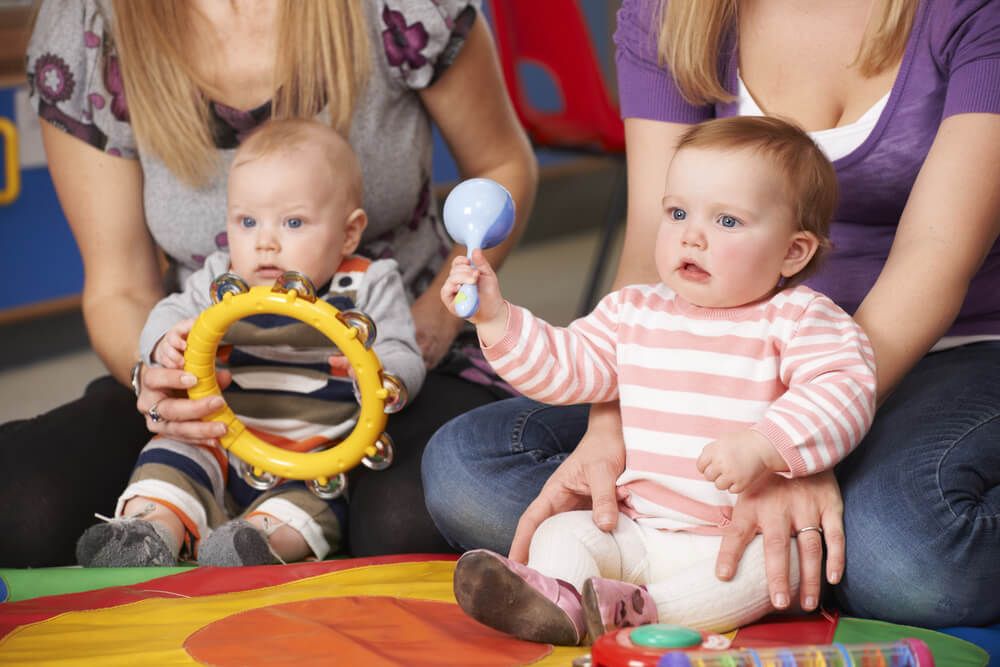
Music and exposure to music help babies to express themselves while they’re non-verbal. They can move, clap and nod to the music, or bang a drum or rattle a shaker. It helps develop and stimulate the creative parts of the brain that can also help with further learning as they grow.
5. Confidence and growth.
As babies become toddlers, the role of music matures. Toddlers are more confident to spontaneously dance or move to music, helping to develop their coordination and physical capabilities.
Toddlers and children moving into school years who have been exposed to a variety of music since babyhood have a greater understanding and appreciation of musical styles, rhyming patterns and melodies.
Including music in ECEC
Early Childhood Education Centres are ramping up the inclusion of music in babies’ learning programs through structured music time, guest programs and singing songs as part of the daily routine.
Centres that have embraced music into their educational programs say the difference is profound, particularly in helping babies with emotional regulation, and ultimately fostering an appreciation for the arts.